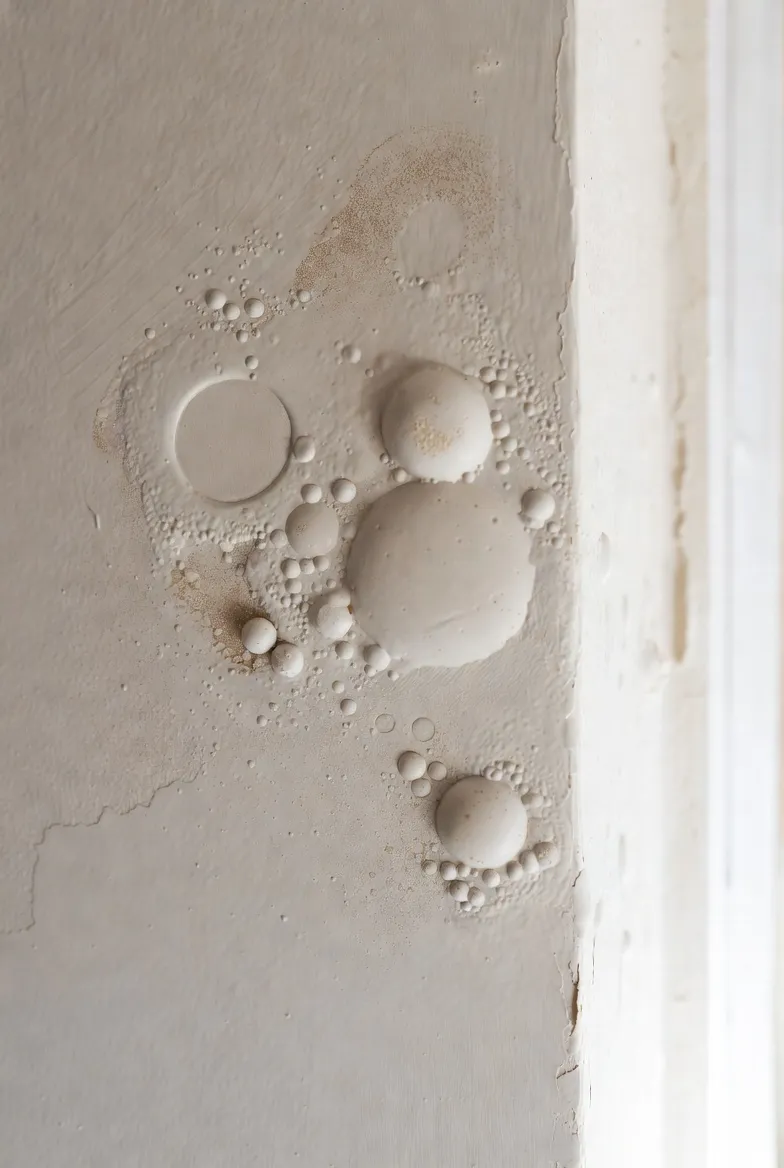
Most paint problems do not appear overnight. They creep in slowly. A bubble here. A crack there. A wall that just never looks quite right, no matter how carefully it was painted.
The good news is that most of these issues are common, well-understood, and completely preventable. The key is knowing what you are looking at and fixing the cause, not just painting over the symptom.
Here are 20 of the most common interior and exterior masonry paint problems, along with what you should do to fix them properly.
1. Blistering
If your paint starts bubbling or lifting off the wall, moisture is usually the culprit. This is especially common in bathrooms, kitchens, or any area where steam builds up behind the paint film.
What to do: Scrape off the loose paint, fix the moisture issue first, and only repaint once the wall is fully dry.
2. Cracking
Cracks in paint often look cosmetic at first, but they usually mean the paint film is under stress. This can happen when paint is applied too thickly or when the surface underneath is too porous.
What to do: Remove loose paint, seal the surface properly, and apply thinner, even coats.
3. Cratering or Pinholes
Tiny holes or crater-like marks form when air gets trapped in thick paint and bursts as it dries.
What to do: Sand the surface smooth and recoat using the correct spread rate and roller technique.
4. Burnishing
Those shiny patches that appear on dark matt walls usually come from repeated rubbing or cleaning. It is common in passages and behind furniture.
What to do: Use paints with good scrub resistance in high-traffic areas and avoid harsh cleaning methods.
5. Flaking
When paint flakes off easily, often with a powdery layer underneath, it usually means the wall was dusty or chalky before painting.
What to do: Remove all loose material, clean thoroughly, and apply a suitable sealer before repainting.
6. Poor Hiding
If the old colour keeps showing through, even after painting, it is usually because the paint was over-thinned or not enough coats were applied.
What to do: Apply the correct number of coats and allow proper drying time between them.
7. Poor Stain Resistance
Walls that mark easily are often coated with paint not designed for kitchens, children’s rooms, or workspaces.
What to do: Choose stain-resistant finishes for areas that see regular mess and cleaning.
8. Poor Print Resistance
When furniture leaves marks on paint that feels dry, it usually means the paint has not fully cured.
What to do: Allow extra curing time before placing items against the wall, and recoat if necessary.
9. Spatter
Excessive splatter during rolling is messy and frustrating. It often comes down to paint quality or roller technique.
What to do: Use quality low-spatter paints and roll with controlled pressure.
10. Picture Framing
Darker edges around walls happen when corners are brushed but the rest is rolled at a different thickness.
What to do: Keep application methods consistent and work in manageable sections.
11. Wrinkling
Wrinkling looks like the paint has puckered as it dried. This can happen when incompatible paints react or when solvents affect the surface.
What to do: Remove the affected paint and recoat using compatible products under proper conditions.
12. Alkali Attack
Patchy discolouration on new plaster is often caused by alkaline salts reacting with the paint.
What to do: Allow new plaster to dry properly and apply an alkali-resistant primer before painting.
13. Bittiness or Grit
If your paint finish feels gritty, it is usually because dust or debris settled on the wet paint.
What to do: Sand smooth and recoat using clean tools and a clean working environment.
14. Mould Growth
Dark mould patches thrive in damp, shaded areas with little airflow. Painting over mould never solves the problem.
What to do: Treat the surface with a fungicidal wash, fix the moisture issue, and repaint with a mould-resistant coating.
15. Blistering or Bagging
Large bubbles on exterior walls almost always mean trapped moisture behind the paint.
What to do: Remove loose paint, stop moisture ingress, and repaint only once the surface is completely dry.
16. Chalking
That fine powder left on your hand when you rub the wall is chalking. It happens as paint weathers over time.
What to do: Wash and scrub the surface thoroughly, seal it, and repaint.
17. Cracking and Flaking
Thick layers of old paint expand and contract with temperature changes, eventually cracking and peeling.
What to do: Remove loose layers fully and prepare the surface properly before repainting.
18. Crazing
Fine spider-web cracks in plaster are usually non-structural but visible through paint.
What to do: Use fibre-reinforced coatings designed to bridge hairline cracks.
19. Colour Variation
When different areas of a wall look lighter or darker, surface texture is often to blame.
What to do: Even out the surface before painting or use textured coatings to minimise variation.
20. Dirt Pickup
Exterior walls that look dirty quickly are often coated with low-quality or overly porous paint.
What to do: Clean thoroughly and repaint using higher-quality coatings with better dirt resistance.
Paint problems are frustrating, but they are rarely mysterious. In most cases, the wall is simply telling you that something underneath needs attention.
By taking preparation seriously, understanding what each problem is really saying, and using the right products for the environment, you can dramatically extend the life of any paint job.
Dekro Paints’ problem-solving guidance is built around real-world conditions, not quick fixes. When surfaces are prepared correctly and coated properly, paint does what it is meant to do, protect, perform, and look good for years.
Find out more information in our product data sheets:
https://dekro.co.za/datasheets/
Put ideas into action
Find the right paint system, or speak to our team for practical guidance.
Find your paint ↗ Speak to DEKRO →